
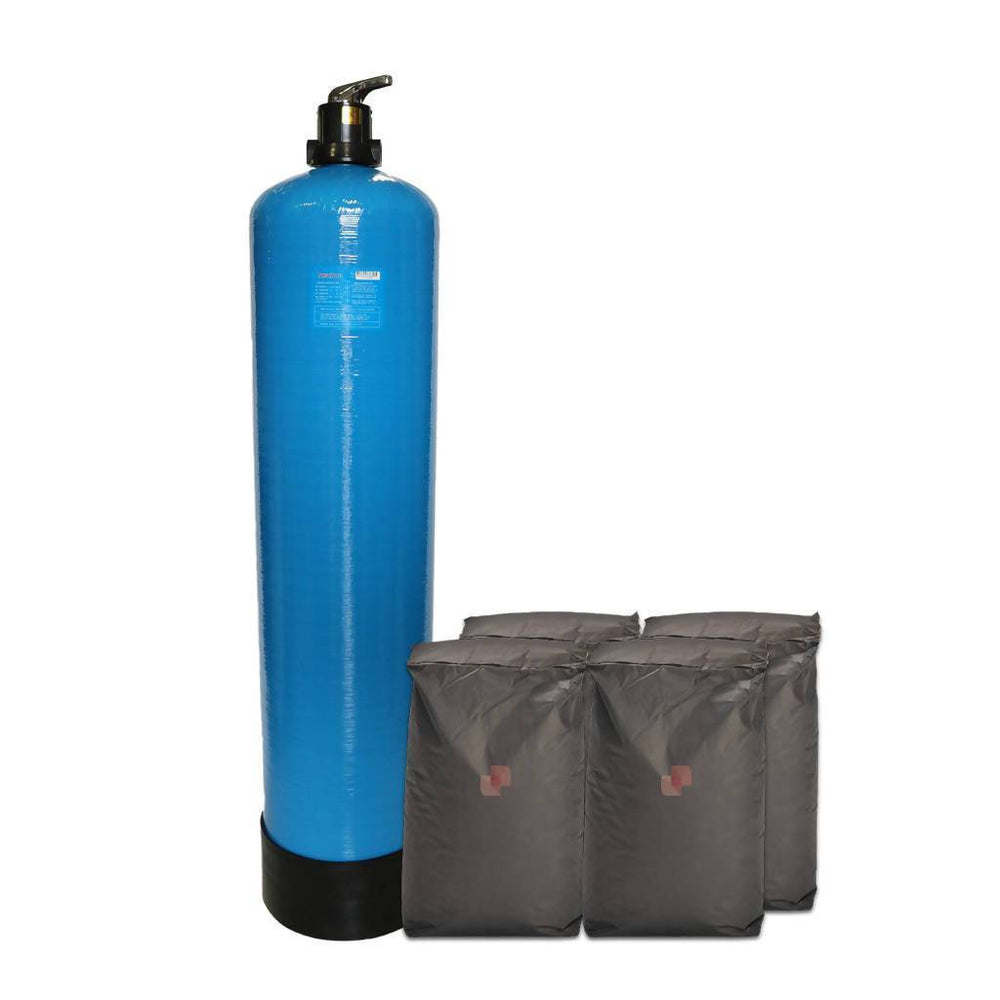
Activated Carbon (GAC) Chlorine, Taste & Odour Reduction Filter – 14×65 FRP Vessel – Manual Backwash
The 14×65 chlorine, taste and odour reduction filter uses granular activated carbon to reduce free chlorine and...
Availability:
In stock
Product type:
Water Filter Vessel
- R 7,929.65
R 9,985.00- R 7,929.65
- Unit price
- per
Please hurry! Only 15 left in stock
10 customers are viewing this product
Shipping & Delivery
Orders are normally processed within 3–5 business days. Choose Express at checkout, where available, for faster courier delivery after dispatch. Shipping options, rates and any delivery estimates are shown at checkout.
Special Delivery Requests / Notes
All 4m & 6m pipe lengths will be cut into 2m lengths for courier delivery. If you require full lengths please email us with your order number and request.
Discounts %
Note: Not all discounts can be compounded, one discount can be applied to an order at a time.


The 14×65 chlorine, taste and odour reduction filter uses granular activated carbon to reduce free chlorine and a range of taste- and odour-causing compounds. It is a useful polishing stage where the carbon type, bed volume and contact time match the treatment objective.
This complete media-vessel package includes the 14×65 FRP vessel, manual backwash valve and granular activated carbon (GAC).
Key Features & Benefits
- Chlorine reduction: Can reduce free chlorine before selected downstream processes or at point of entry.
- Taste and odour improvement: Adsorbs suitable organic compounds that affect the sensory quality of water.
- Serviceable carbon bed: Backwashing removes trapped suspended material; the carbon can be replaced when its treatment capacity is exhausted.
- Manual backwash: The operator selects and times the cleaning stages, then returns the valve to service. This suits installations with someone available to carry out routine maintenance.
- FRP construction: A corrosion-resistant vessel body houses the treatment bed.
Applications
- Municipal-water polishing for free chlorine, taste and odour.
- Chlorine reduction ahead of compatible reverse-osmosis systems.
- Polishing of pre-treated borehole or stored water where suitable organic compounds are present.
Technical Specifications
- Product code: H2OW1138
- Vessel size designation: 14×65; nominal vessel designation, not the installed height including the valve.
- Vessel material: Fibreglass-reinforced plastic (FRP).
- Treatment media: granular activated carbon (GAC)
- Head / control: Manual backwash valve
- System design flow: Select from the water analysis, media bed depth, required outlet quality and available backwash supply. Vessel size or valve capacity alone does not establish the treatment flow.
What’s Included
- Vessel: 1 × 14×65 FRP vessel.
- Control valve: 1 × Manual backwash valve.
- Media: granular activated carbon (GAC) supplied for this product configuration.
Installation & Use
- Before installation: Have the source water tested and confirm the treatment sequence, operating flow and backwash requirements.
- Site connections: Arrange inlet and outlet pipework, suitable isolation/bypass provision and a correctly sized drain for backwash water.
- Commissioning: Load and condition the media according to the media and valve instructions. Leave the required expansion space; supplied bag quantities are not an instruction to fill the vessel to the top.
- Cleaning control: Follow the fitted valve instructions for backwash and rinse. Time each stage and return the valve to service when cleaning is complete.
- Operating limits: Use the lowest pressure and temperature limits of the vessel, valve and other fitted components. Isolate and depressurise before opening the vessel.
Important Information
- Contact time: Size the system using the actual carbon bed volume and design flow. Higher flow reduces contact time and may reduce treatment effectiveness.
- Media replacement: Backwashing does not restore exhausted adsorption capacity. Replace the carbon according to treated-water testing, loading and breakthrough.
- Feed-water quality: Reduce sediment and significant iron or manganese loading before the carbon stage where necessary.
- Scope of treatment: GAC is not a water softener or a disinfection stage. Chloramine and specialised contaminant removal require a carbon grade and design verified for that duty.
- Complete treatment design: Additional oxidation, pH correction, softening or disinfection may be required for the intended use. A media vessel alone does not establish that water is suitable for drinking.
Carbon Contact Time & Flow
Use the following existing chart as an indicative comparison only. It is not a product flow rating: the actual carbon bed volume, carbon specification and contaminant target must be confirmed when sizing the filter. Different treatment duties require different contact times.

Important: Installation & Flushing
- New carbon releases dust that can block taps, aerators, strainers, downstream filters and other equipment.
- At first use and after carbon replacement, route flushing water directly to a bucket or open drain, bypassing downstream equipment via the manufacturer's approved flushing connection.
- Condition carbon media with the specified soaking, backwash and rinse sequence until clear, completing the full required time or volume. A brief cartridge flush is not sufficient.
- Keep flush water away from RO membranes and sensitive stages. Do not drink it; seek help if particles persist.
- Clear water is not proof of drinking-water safety; follow all feed-water, disinfection and commissioning requirements.
Related Products
Example product title
- R 7,929.65
R 9,985.00- R 7,929.65
- Unit price
- per
Example product title
- R 7,929.65
R 9,985.00- R 7,929.65
- Unit price
- per
Example product title
- R 7,929.65
R 9,985.00- R 7,929.65
- Unit price
- per
Example product title
- R 7,929.65
R 9,985.00- R 7,929.65
- Unit price
- per
Example product title
- R 7,929.65
R 9,985.00- R 7,929.65
- Unit price
- per
Example product title
- R 7,929.65
R 9,985.00- R 7,929.65
- Unit price
- per
Recently Viewed Products
Example product title
- R 7,929.65
R 9,985.00- R 7,929.65
- Unit price
- per
Example product title
- R 7,929.65
R 9,985.00- R 7,929.65
- Unit price
- per
Example product title
- R 7,929.65
R 9,985.00- R 7,929.65
- Unit price
- per
Example product title
- R 7,929.65
R 9,985.00- R 7,929.65
- Unit price
- per
Example product title
- R 7,929.65
R 9,985.00- R 7,929.65
- Unit price
- per
Example product title
- R 7,929.65
R 9,985.00- R 7,929.65
- Unit price
- per
Example product title
- R 7,929.65
R 9,985.00- R 7,929.65
- Unit price
- per
Example product title
- R 7,929.65
R 9,985.00- R 7,929.65
- Unit price
- per
Example product title
- R 7,929.65
R 9,985.00- R 7,929.65
- Unit price
- per
Example product title
- R 7,929.65
R 9,985.00- R 7,929.65
- Unit price
- per
- Choosing a selection results in a full page refresh.