
HG-C100E Cation Exchange Water Softener Resin | 25 L
HG-C100E is a gel-type cation-exchange resin for reducing calcium and magnesium hardness in water. Supplied in the...
Availability:
In stock
Product type:
Water Softener Resin
- R 1,299.00
R 1,689.00- R 1,299.00
- Unit price
- per
Please hurry! Only 50 left in stock
10 customers are viewing this product
Shipping & Delivery
Select from shipping options at Check Out -
Shipped & Delivered Within 2- 5 Business Days
Special Delivery Requests / Notes
All 4m & 6m pipe lengths will be cut into 2m lengths for courier delivery. If you require full lengths please email us with your order number and request.
Discounts %
Note: Not all discounts can be compounded, one discount can be applied to an order at a time.


HG-C100E is a gel-type cation-exchange resin for reducing calcium and magnesium hardness in water. Supplied in the sodium form, it exchanges hardness ions for sodium ions and is regenerated using a salt solution. Supplied in a 25 L bag.
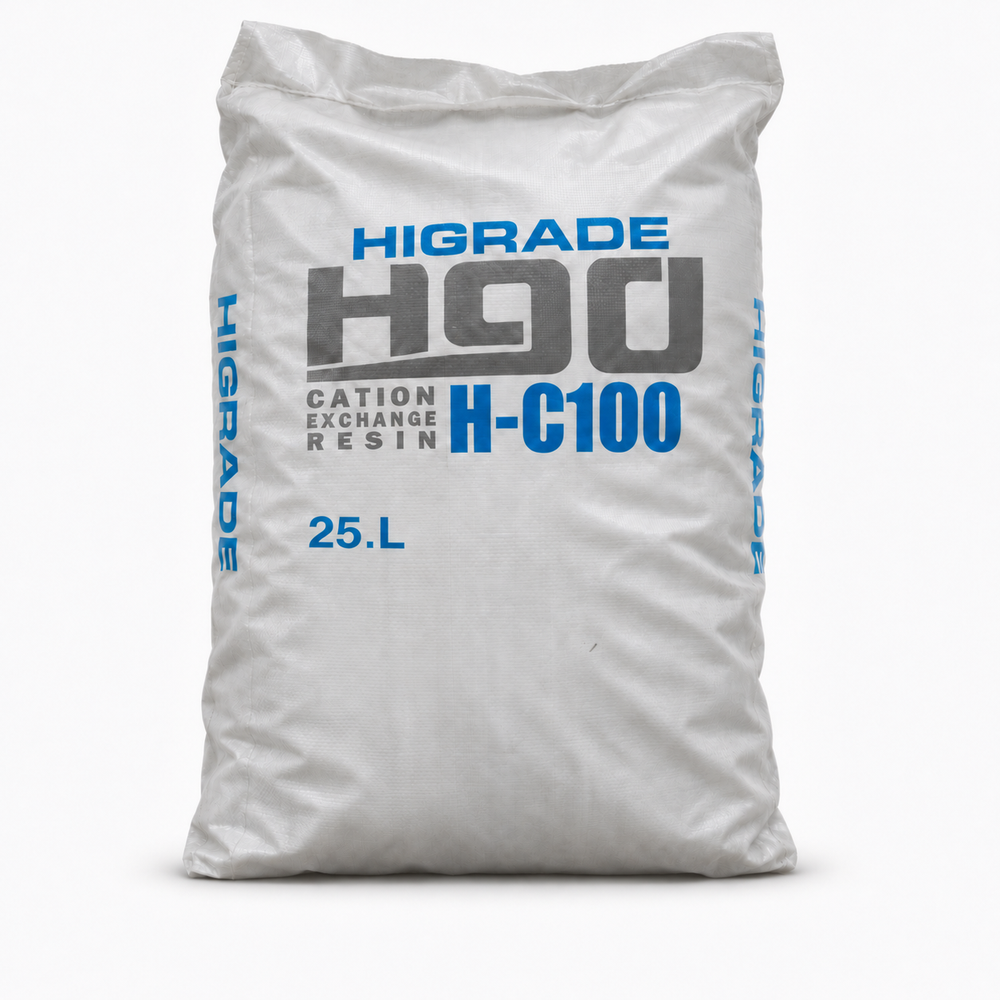
Image note: The image is an illustrative recreation of the H-C100 reference bag shown in the supplied technical sheet. Actual HG-C100E packaging and printed details may differ.
Key features and benefits
- Hardness reduction: helps limit new scale formation caused by calcium and magnesium.
- Gel resin structure: polystyrene crosslinked with divinylbenzene, supplied as light brown spherical beads.
- Regenerable media: suitable for repeated sodium-cycle softening when correctly operated and maintained.
Applications
- Domestic water-softening systems selected for the water analysis and required flow.
- Commercial and industrial hardness removal in suitably designed softening equipment.
Technical specifications
| Model | HG-C100E |
|---|---|
| Resin type | Gel-type cation-exchange resin |
| Polymer structure | Polystyrene crosslinked with divinylbenzene |
| Ionic form | Sodium (Na+) |
| Appearance | Light brown spherical beads |
| Total exchange capacity, dry | ≥ 4.5 mmol/g, sodium form |
| Total exchange capacity, volume basis | ≥ 1.9 mmol/mL, sodium form |
| Moisture content | 46–50% |
| Resin density | 1.25–1.29 g/mL |
| Particle size | 0.315–1.25 mm: ≥ 95%; below 0.315 mm: ≤ 1% |
| Effective particle size | 0.40–0.60 mm |
| Uniformity coefficient | ≤ 1.7 |
| Swelling, sodium to hydrogen form | ≤ 10% |
| Maximum operating temperature | 120°C |
| Minimum bed depth | 800 mm |
| Service flow rate | 5–25 bed volumes per hour |
What's included
- One 25 L bag of HG-C100E cation-exchange water softener resin.
Installation and use
System sizing and regeneration settings must suit the incoming water hardness, sodium content, resin volume and required treated-water quality. One bed volume is a water volume equal to the resin bed volume. Use in a suitable resin vessel with compatible distribution and regeneration equipment.
For sodium-cycle regeneration, the technical data specifies sodium chloride at 80–220 g per litre of resin, 5–10% solution concentration, 2–8 bed volumes per hour and at least 30 minutes contact time. Slow rinse: 2 bed volumes at the regeneration flow. Fast rinse: 4–8 bed volumes at the service flow. These are design parameters, not a substitute for the softener equipment instructions.
Important information
- Prolonged exposure to significant free chlorine, hypochlorite or other strong oxidising agents can damage the resin and reduce mechanical strength.
- Working capacity and residual hardness depend on the feed water, regenerant dose and flow conditions.
- Confirm resin-bed design and operating conditions before substituting media in an existing softener.
Related Products
Example product title
- R 1,299.00
R 1,689.00- R 1,299.00
- Unit price
- per
Example product title
- R 1,299.00
R 1,689.00- R 1,299.00
- Unit price
- per
Example product title
- R 1,299.00
R 1,689.00- R 1,299.00
- Unit price
- per
Example product title
- R 1,299.00
R 1,689.00- R 1,299.00
- Unit price
- per
Example product title
- R 1,299.00
R 1,689.00- R 1,299.00
- Unit price
- per
Example product title
- R 1,299.00
R 1,689.00- R 1,299.00
- Unit price
- per
Recently Viewed Products
Example product title
- R 1,299.00
R 1,689.00- R 1,299.00
- Unit price
- per
Example product title
- R 1,299.00
R 1,689.00- R 1,299.00
- Unit price
- per
Example product title
- R 1,299.00
R 1,689.00- R 1,299.00
- Unit price
- per
Example product title
- R 1,299.00
R 1,689.00- R 1,299.00
- Unit price
- per
Example product title
- R 1,299.00
R 1,689.00- R 1,299.00
- Unit price
- per
Example product title
- R 1,299.00
R 1,689.00- R 1,299.00
- Unit price
- per
Example product title
- R 1,299.00
R 1,689.00- R 1,299.00
- Unit price
- per
Example product title
- R 1,299.00
R 1,689.00- R 1,299.00
- Unit price
- per
Example product title
- R 1,299.00
R 1,689.00- R 1,299.00
- Unit price
- per
Example product title
- R 1,299.00
R 1,689.00- R 1,299.00
- Unit price
- per
- Choosing a selection results in a full page refresh.