
AFM Sediment & Turbidity Reduction Filter – 10×35 FRP Vessel – Automatic Backwash
The 10×35 sediment and turbidity reduction filter captures suspended particles to improve water clarity. AFM is activated...
Availability:
In stock
Product type:
Water Filter Vessel
- R 5,849.00
R 6,229.00- R 5,849.00
- Unit price
- per
Please hurry! Only 5 left in stock
10 customers are viewing this product
Shipping & Delivery
Select from shipping options at Check Out -
Shipped & Delivered Within 2- 5 Business Days
Special Delivery Requests / Notes
All 4m & 6m pipe lengths will be cut into 2m lengths for courier delivery. If you require full lengths please email us with your order number and request.
Discounts %
Note: Not all discounts can be compounded, one discount can be applied to an order at a time.


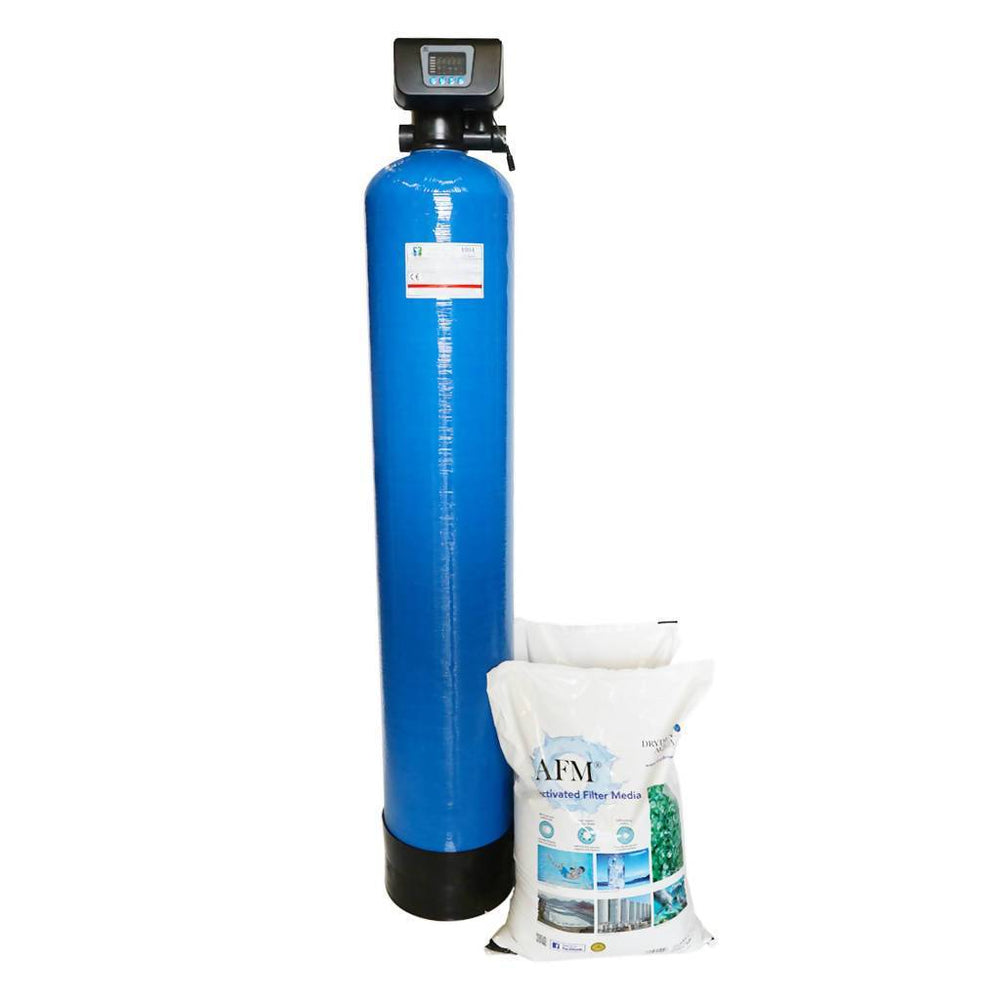
The 10×35 sediment and turbidity reduction filter captures suspended particles to improve water clarity. AFM is activated glass filter media used as a physical filtration stage, with routine backwashing to remove accumulated material from the bed.
This complete media-vessel package includes the 10×35 FRP vessel, Runxin automatic backwash valve and AFM activated glass filter media.
Key Features & Benefits
- Clearer water: Reduces suspended sediment and particulate matter responsible for turbidity.
- Activated glass media: Provides a filtration bed designed to resist biofouling when correctly operated.
- Useful pre-filtration: Helps reduce particulate loading on downstream cartridges and other treatment equipment.
- Automatic backwash: A programmed cleaning cycle reduces hands-on valve operation. The inlet supply and waste drain must still provide the required backwash capacity.
- FRP construction: A corrosion-resistant vessel body houses the treatment bed.
Applications
- Sediment filtration for borehole, wellpoint, rainwater and municipal supplies, following a water-quality assessment.
- Point-of-entry filtration and suitable commercial water processes.
- Pre-filtration before fine cartridges, UV or reverse osmosis where required by the treatment design.
Technical Specifications
- Product code: H2OW1375
- Vessel size designation: 10×35; nominal vessel designation, not the installed height including the valve.
- Vessel material: Fibreglass-reinforced plastic (FRP).
- Treatment media: AFM activated glass filter media
- Head / control: Runxin automatic backwash valve
- System design flow: Select from the water analysis, media bed depth, required outlet quality and available backwash supply. Vessel size or valve capacity alone does not establish the treatment flow.
What’s Included
- Vessel: 1 × 10×35 FRP vessel.
- Control valve: 1 × Runxin automatic backwash valve.
- Media: AFM Grade 1: 1 × 25 kg bag.
- Internals: Riser pipe and distribution components as specified for this vessel.
Installation & Use
- Before installation: Have the source water tested and confirm the treatment sequence, operating flow and backwash requirements.
- Site connections: Arrange inlet and outlet pipework, suitable isolation/bypass provision and a correctly sized drain for backwash water.
- Commissioning: Load and condition the media according to the media and valve instructions. Leave the required expansion space; supplied bag quantities are not an instruction to fill the vessel to the top.
- Cleaning control: Programme the valve for the site’s water quality and follow the fitted valve instructions.
- Operating limits: Use the lowest pressure and temperature limits of the vessel, valve and other fitted components. Isolate and depressurise before opening the vessel.
Important Information
- Treatment role: AFM captures particles. Dissolved iron or manganese generally requires an oxidation stage before the resulting solids can be filtered.
- Filtration performance: Particle capture depends on the AFM grade, media layering, filtration velocity and feed water. The vessel is not assigned an absolute micron rating here.
- Water hygiene: Resistance to biofouling in the media does not mean the water is disinfected. Provide a separately designed disinfection stage where required.
- Bed care: Use the specified media grading, support arrangement and expansion space; backwash at a flow that cleans the bed without washing media out.
- Complete treatment design: Additional oxidation, pH correction, softening or disinfection may be required for the intended use. A media vessel alone does not establish that water is suitable for drinking.
Related Products
Example product title
- R 5,849.00
R 6,229.00- R 5,849.00
- Unit price
- per
Example product title
- R 5,849.00
R 6,229.00- R 5,849.00
- Unit price
- per
Example product title
- R 5,849.00
R 6,229.00- R 5,849.00
- Unit price
- per
Example product title
- R 5,849.00
R 6,229.00- R 5,849.00
- Unit price
- per
Example product title
- R 5,849.00
R 6,229.00- R 5,849.00
- Unit price
- per
Example product title
- R 5,849.00
R 6,229.00- R 5,849.00
- Unit price
- per
Recently Viewed Products
Example product title
- R 5,849.00
R 6,229.00- R 5,849.00
- Unit price
- per
Example product title
- R 5,849.00
R 6,229.00- R 5,849.00
- Unit price
- per
Example product title
- R 5,849.00
R 6,229.00- R 5,849.00
- Unit price
- per
Example product title
- R 5,849.00
R 6,229.00- R 5,849.00
- Unit price
- per
Example product title
- R 5,849.00
R 6,229.00- R 5,849.00
- Unit price
- per
Example product title
- R 5,849.00
R 6,229.00- R 5,849.00
- Unit price
- per
Example product title
- R 5,849.00
R 6,229.00- R 5,849.00
- Unit price
- per
Example product title
- R 5,849.00
R 6,229.00- R 5,849.00
- Unit price
- per
Example product title
- R 5,849.00
R 6,229.00- R 5,849.00
- Unit price
- per
Example product title
- R 5,849.00
R 6,229.00- R 5,849.00
- Unit price
- per
- Choosing a selection results in a full page refresh.